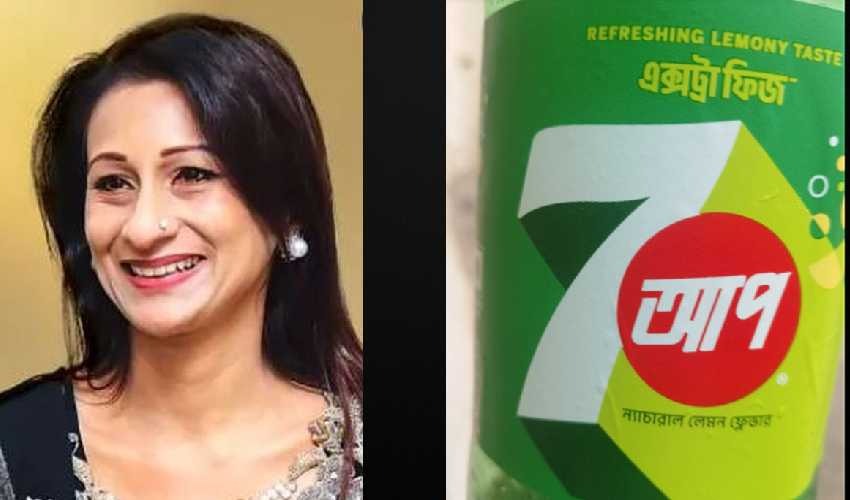
The Safe Food Court had issued a summons directing her appearance following laboratory test findings revealing severe deviations from national quality standards. However, because the summons was not properly served, the court has postponed proceedings to a subsequent date.
Despite the formal legal action, Seven-Up sales remain active across retail markets nationwide, drawing sharp criticism from consumer rights advocates over the perceived inaction of regulatory bodies such as the Bangladesh Standards and Testing Institution (BSTI) and the Directorate of National Consumer Rights Protection (DNCRP).
Laboratory Findings and Health Concerns
According to the case dossier, laboratory analyses of Seven-Up samples detected unauthorized and excessive levels of artificial sweeteners, specifically aspartame (methyl ester) and acesulfame potassium.
- Acesulfame Potassium: While the maximum permissible limit under BSTI standards is 300 milligrams per specified unit, laboratory tests reportedly detected 450 milligrams.
- Aspartame: Against a stipulated maximum limit of 700 milligrams, tests recorded 1,000 milligrams.
In total, significant variances were flagged across five of six chemical parameters tested.
┌────────────────────────────────────────────────────────────────────────┐ │ LABORATORY TEST RESULTS VS. PERMISSIBLE LIMITS │ ├────────────────────────────────────────────────────────────────────────┤ │ • Acesulfame Potassium : Detected 450 mg (Max Limit: 300 mg) │ │ • Aspartame : Detected 1,000 mg (Max Limit: 700 mg) │ │ • Overall Compliance : Variances found in 5 of 6 chemical parameters │ │ • Regulatory Status : Summon issued to Transcom MD Simin Rahman │ └────────────────────────────────────────────────────────────────────────┘The findings have renewed public health discussions regarding artificial sweeteners. In July 2023, the International Agency for Research on Cancer (IARC)—the cancer research arm of the World Health Organization (WHO), alongside a joint FAO/WHO Expert Committee on Food Additives (JECFA)—classified aspartame as “possibly carcinogenic to humans” (Group 2B), citing limited evidence linking it to hepatocellular carcinoma (liver cancer), though classification in Group 2B does not denote definitive causation.
Simultaneously, medical experts note that excessive consumption of acesulfame potassium and aspartame carries specific risks, particularly for individuals with phenylketonuria (PKU), who cannot properly metabolize phenylalanine.
Regulatory Inaction and Public Concerns
Legal observers noted that proper service of the court summons would have allowed prompt judicial directives. Critics argue that police negligence in executing the summons has delayed accountability, while regulatory watchdogs have failed to order a market recall of the affected batches.
Shafiquzzaman, President of the Consumers Association of Bangladesh (CAB), asserted that any consumer product proven to fall short of safety standards must be immediately pulled from shelves.
"Authorities must explain why prompt corrective action has not been taken," Shafiquzzaman said. "Public health risks cannot be compromised under any circumstances. CAB is monitoring the situation closely."
Mahbub Kabir Milon, a specialist in consumer rights and food safety governance, emphasized that failing to adhere to Bangladesh Standards (BDS) constitutes a punishable offense under consumer protection laws, noting that omitting mandatory labeling details is equally unlawful.
Efforts to obtain a comment from Transcom Beverages Limited proved unsuccessful; Head of Brand Shariful Islam Shyamal did not respond to multiple phone calls or subsequent inquiries sent via WhatsApp and email. Queries directed to Transcom Beverages and parent company PepsiCo also went unanswered prior to publication.
As the legal proceedings continue, experts are calling for an immediate recall of the flagged beverage lots and rigorous market monitoring to safeguard consumers, particularly children and adolescents, from potential health hazards.