
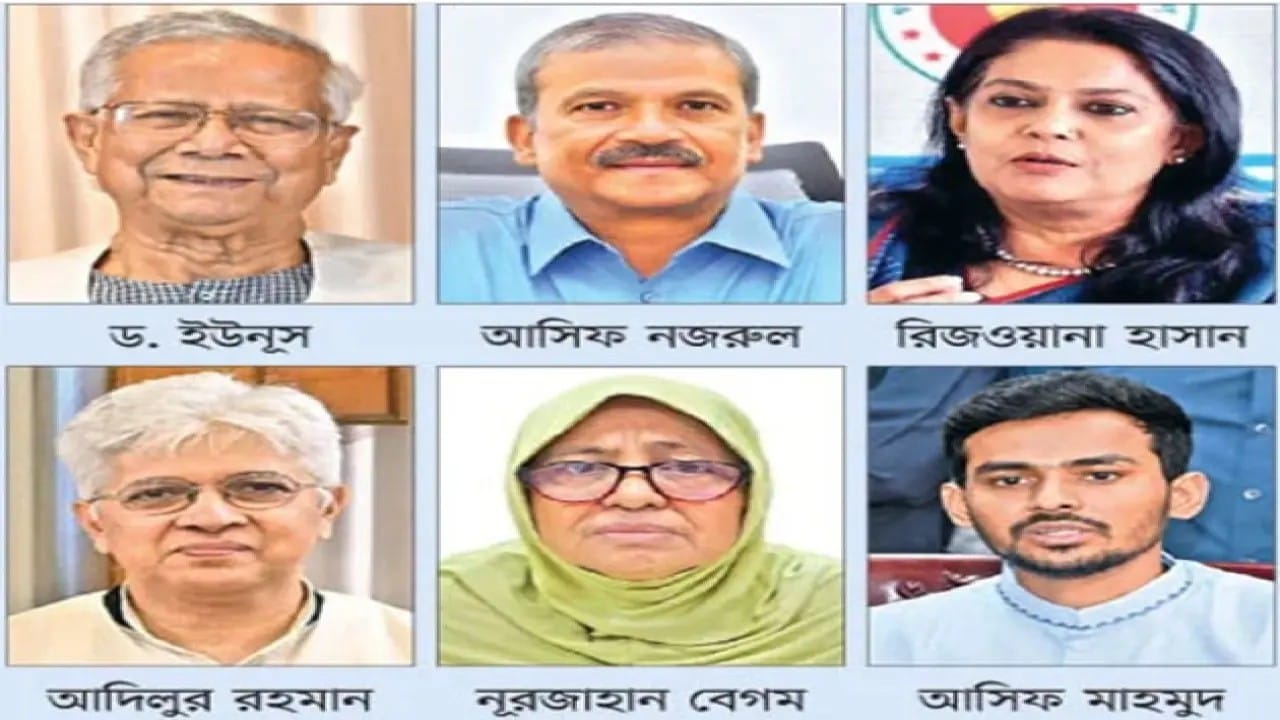
Recently, Rashed Khan, Political Assistant to the Prime Minister, alleged that Dr. Yunus pursued a political ambition to sideline the Bangladesh Nationalist Party (BNP) from politics and prolong his tenure by delaying elections. According to him, following the political weakening of the Awami League, there was a calculated plan to displace the BNP as well as to create political space for Jamaat-e-Islami and the National Citizens' Party (NCP). While official statements from the concerned parties must be equally weighed, the growing public traction of these claims underscores the urgency of verifying their authenticity.
Earlier, during parliamentary budget discussions, Home Minister Salauddin Ahmad also stressed the necessity of investigating the interim government's actions. He noted that alongside corrupt practices during the Awami League's tenure, allegations emerging from the interim government's rule should be independently investigated by the Anti-Corruption Commission (ACC). Such calls for scrutiny align with the declared principles of state transparency and accountability.
In a democratic framework, subjecting any government to investigation when allegations arise is a standard procedure. Whether elected or non-elected, every administration must remain accountable to the citizens for decisions and actions taken during its term, as state power is exercised solely in the public interest.
Throughout the interim government's tenure, numerous questions and complaints were raised regarding the judiciary, civil administration, public appointments, economic decisions, the health sector, public procurement, and key policy choices. Allegations have ranged from corruption and abuse of power to debates over the legal validity of specific decisions. Since many of these claims remain unverified, an impartial inquiry is essential to separate political rhetoric from factual reality.
Specific allegations of personal enrichment, administrative influence-peddling, and financial irregularities have periodically surfaced against certain advisers of the interim government and their close associates. Reports indicate that the ACC has already initiated inquiries into some of these matters. Concluding these investigations swiftly will dispel public doubts and set a positive precedent for the future.
Furthermore, unverified claims circulating on social media also require formal verification. While baseless rumors must be dismissed, turning a blind eye to credible evidence contradicts the rule of law. Therefore, determining the validity of these allegations rests squarely on the relevant investigative agencies.
International agreements executed during the interim administration have likewise drawn scrutiny. Renowned economist Dr. Debapriya Bhattacharya emphasized the need to review these contracts to ensure they align with national interests and the current government's policy framework, suggesting renegotiation where necessary. Given that an interim government’s primary mandate is to handle day-to-day administration and facilitate free elections, caution is required when undertaking long-term policy commitments.
This discussion gains added significance in the context of reinstating the non-partisan caretaker government system in Bangladesh. Should non-partisan interim administrations assume responsibility in the future, defining their scope of authority, duties, decision-making boundaries, and accountability structures will be vital. Analyzing the recent 18-month experience offers valuable insights toward that goal.
However, experts emphasize that any investigation must avoid political vendettas or character assassination. Inquiries must remain lawful, neutral, evidence-based, and transparent. Where guilt is established, action must follow strictly according to the law; conversely, where claims prove baseless, those accused should be fully exonerated to reinforce public trust in justice and the rule of law.
Ultimately, an independent and objective review of the 18-month governance under Dr. Muhammad Yunus is not merely about settling past accounts. It is crucial for shaping future statecraft, fostering institutional accountability, and refining the caretaker government framework. In a democratic state, accountability is not a tool for retaliation, but the very cornerstone of good governance.