Following the political turn of events on August 15, 1975, Bangladesh plunged into deep political uncertainty, exacerbated by a counter-coup led by Brigadier Khaled Mosharraf on November 3. Although aimed at restoring military discipline and chain of command, the intervention induced a state breakdown and structural paralysis across government apparatuses between November 3 and 6.
Amid the standoff, an uprising initiated by soldiers erupted within Dhaka Cantonment after midnight on November 6. A central objective was releasing then-Army Chief Major General Ziaur Rahman from house arrest. Soldiers subsequently took to the streets of Dhaka alongside civilians, chanting slogans including *"Bangladesh Zindabad"* and *"Long Live the Sepoy-People's Revolution."*
The events of November 7 elevated Ziaur Rahman back to the center of state power. Reinstated as Army Chief, he subsequently assumed responsibilities as Deputy Chief Martial Law Administrator. While President Justice Abu Sadat Mohammad Sayem formally remained head of state, Ziaur Rahman progressively assumed key administrative and governance roles, eventually spearheading the restoration of multi-party democracy, broadening political participation, and founding the BNP.
Ziaur Rahman's governance extended to economic reform, laying early foundations for overseas manpower export, the ready-made garment (RMG) export industry, agricultural expansion, and rural canal-digging initiatives. Following his assassination on May 30, 1981, and the subsequent military coup by Lieutenant General Hussain Muhammad Ershad on March 24, 1982, Begum Khaleda Zia stepped into active politics.
Joining the BNP in 1982, Begum Khaleda Zia assumed the party chair in August 1984 and led a relentless, multi-party movement against military rule. Refusing to compromise with the regime and boycotting contested elections in 1986, her political stance earned her the moniker "Uncompromising Leader." The movement culminated in the mass uprising that overthrew Ershad on December 6, 1990, paving the way for the 1991 general elections, where her administration oversaw Bangladesh's transition back to a parliamentary form of government.
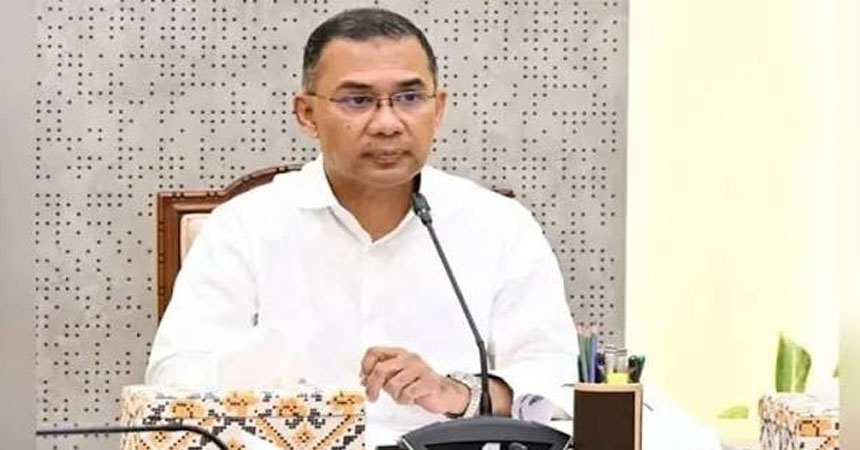
Following the political crises of 2007 and subsequent political developments under the Awami League administration, Prime Minister Tarique Rahman emerged as a central figure in BNP's strategic leadership. Operating while residing abroad due to legal and political pressures, he organized party structures and guided opposition movements demanding electoral integrity and democratic rights.
This opposition trajectory reached a historic juncture during the July–August 2024 uprising, where student-led demonstrations against quota systems evolved into a broad-based mass movement. The resulting civil unrest led to the resignation and departure of Sheikh Hasina on August 5, 2024. The BNP highlights Tarique Rahman's long-term political organizing and strategic guidance as key elements underpinning the popular momentum that drove the 2024 mass uprising.
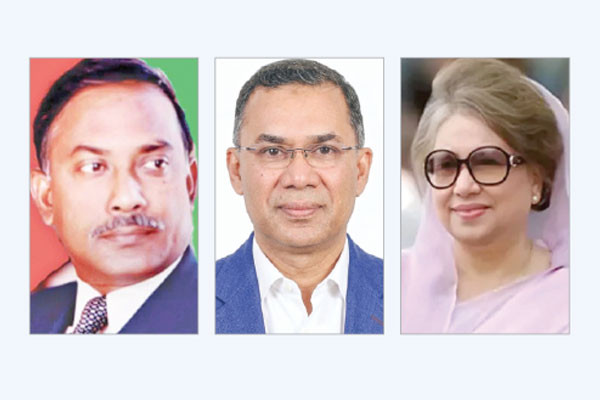
BNP frames this history as a continuous lineage of leadership across three generations of the Zia family—connecting Ziaur Rahman’s role in 1971 and November 1975, Begum Khaleda Zia’s anti-autocracy movement in the 1980s, and Tarique Rahman’s political leadership culminating in the 2024 transition. Commemorating the November 7 National Revolution and Solidarity Day thus serves as a reflective point linking past historical transitions to the contemporary political landscape of Bangladesh.