A flat cannot be considered affordable simply because its purchase price is low. If living in that building means paying higher electricity bills, facing rising maintenance costs or spending more time and money commuting to work every day, the actual cost of housing can be significantly higher.
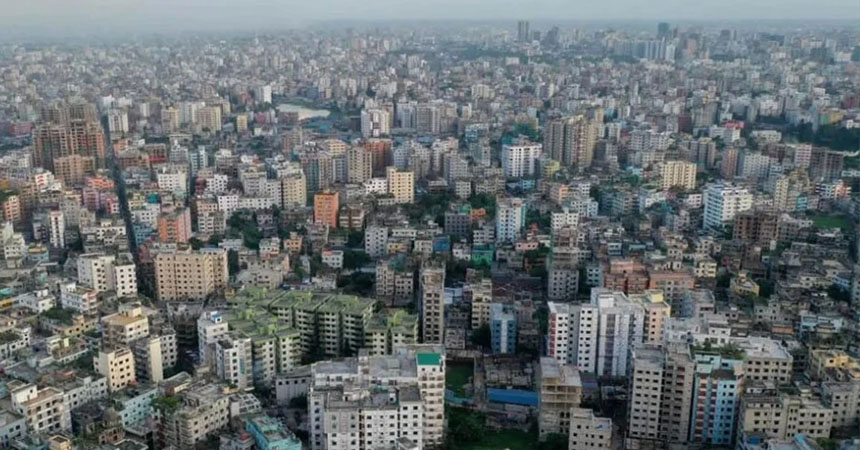
Dhaka has evolved from a commercial settlement along the Buriganga River into a sprawling metropolis. Since becoming the capital of Mughal Bengal in 1610, the city has undergone major transformations. Today, as the capital of independent Bangladesh, Dhaka is the country's primary centre for education, employment, business and economic activity. As a result, demand for housing continues to rise.
Against this backdrop, the major challenge for Dhaka's housing sector is no longer simply constructing more buildings. It is ensuring that housing is safe, environmentally sustainable, healthy and affordable over the long term.
World Habitat Day is observed on October 5. The theme for 2026, “Adequate Housing for All”, highlights that housing is not only a basic human need but is also deeply connected to urban planning, the economy and the environment.
This makes it increasingly important to prioritise the development of green and affordable buildings as Dhaka seeks to address its housing challenges.
Looking Beyond the Purchase Price
Housing affordability cannot be measured solely by the purchase price of a flat or the monthly rent. Electricity, water, maintenance, repair and commuting costs must also be taken into account.
A low-rent home located far from a person's workplace, for example, may result in substantial daily transportation costs. Similarly, poorly designed buildings with inadequate natural light and ventilation often require greater use of air conditioning, increasing electricity bills.
For this reason, “life-cycle cost” needs to be considered from the earliest stage of building design.
The cost of constructing a building represents only part of its overall economic picture. The expenses associated with electricity, water, maintenance and repairs over the following 10, 20 or 30 years should also be taken into consideration.
A building with a lower initial construction cost is not necessarily the more affordable option. A somewhat higher upfront investment in energy and water efficiency can reduce household expenses significantly over the long term.
Reviews of research by the World Green Building Council have also highlighted the economic potential of green buildings.
Green Does Not Always Mean Expensive
In Bangladesh, green or environmentally friendly buildings are still often perceived as requiring substantial additional investment. In reality, many effective green-building measures can be incorporated at the design stage without relying on expensive technologies.
Proper building orientation, appropriate window placement, maximising natural light and ventilation, creating shade and using locally available construction materials can all improve building performance when considered from the outset.
Although some of these measures may require additional investment initially, they can reduce electricity, water and maintenance costs over time.
Green buildings, therefore, should not be viewed solely as an environmental initiative. They can also help reduce household expenses and improve the long-term economic performance of buildings.
A Local Framework for Green Buildings
Considering Bangladesh's climate, disaster risks, locally available construction materials and socioeconomic realities, the Housing and Building Research Institute (HBRI) has developed the HBRI-DESH Framework.
Technical assistance for the framework was provided by the United Nations Office for Project Services (UNOPS) under a global programme of the United Nations Environment Programme (UNEP).
DESH stands for “Design for Environment and Sustainable Habitats”. Alongside international experience, the framework takes into account Bangladesh's hot and humid climate, disaster risks, availability of local materials and socioeconomic conditions.
The DESHboard serves as a tool for design and assessment, while UN-Habitat is also reviewing how the framework can be applied in practice.
This means Bangladesh already has a locally relevant framework for assessing green buildings. The next step is to ensure its wider adoption.
Policy Incentives Can Encourage Green Housing
Dhaka's future housing development can also benefit from the revised Detailed Area Plan (DAP) of the Rajdhani Unnayan Kartripakkha (RAJUK).
Under the revised gazette issued on December 14, 2025, eligible green buildings that meet specified conditions and obtain the required approvals and certificates can receive up to an additional 0.5 Floor Area Ratio (FAR).
FAR refers to the ratio between the total calculable floor area of a building and the size of the plot on which it is constructed.
The DAP also provides incentives for affordable housing. In unplanned areas, apartment and flat buildings under category A3 and mixed-use developments incorporating affordable housing under category A6 may qualify for an additional FAR of up to 0.5 or 0.75, subject to specified conditions.
Under one option, at least five units of a specified size must be provided on a minimum 10-katha plot. Under the other, 5% of the total floor space must be reserved for affordable housing on a minimum 20-katha plot. One of the two options would apply.
Such policy incentives could be significant for developers and building owners. Their economic value should therefore be assessed carefully when planning housing projects.
Retrofitting Existing Buildings
The discussion on green housing should not be limited to new construction.
Dhaka has a large stock of older buildings where energy and water efficiency can potentially be improved through renovation and retrofitting.
Depending on the type of building and applicable requirements, such buildings can be assessed under the HBRI-DESH Framework. International green-building certification systems such as EDGE and LEED can also be considered where appropriate.
Making existing buildings more efficient can, in many cases, be more resource- and environmentally effective than demolishing them and constructing new buildings.
Green buildings are designed and constructed to minimise their environmental impact throughout their life cycle. They can improve energy and water efficiency, reduce greenhouse gas emissions, promote more efficient use of construction materials and create healthier indoor environments.
These benefits are particularly important in a densely populated city such as Dhaka, where rising demand for air conditioning, high electricity consumption, air pollution and increasing urban temperatures pose growing challenges.
A Significant Opportunity for Dhaka
Around 10,000 building plans are reportedly approved each year within RAJUK's jurisdiction. If even 10% of those buildings were constructed as green buildings, it could mark a significant shift towards a more sustainable housing system in Dhaka.
There are, however, challenges.
The initial cost of energy-efficient technologies can be higher than conventional construction methods in some cases. Awareness of green construction also remains limited among developers, building owners and buyers.
The sector therefore needs greater investment in skilled professionals, while incentives such as additional FAR and lower-cost financing could help encourage green construction.
Large developers have design expertise, purchasing capacity and technical experience. They could demonstrate how green construction can be incorporated into housing projects aimed at middle-income households.
Similarly, public housing, schools, hospitals and government and private office buildings should be assessed not only on their initial construction costs but also on their full life-cycle costs.
Publishing data on initial investment and savings in electricity, water and maintenance over the operational life of projects could provide valuable examples for future developments.
Banks and other financial institutions also have an important role to play. Suitable loans, long-term financing and affordable instalment arrangements for green and affordable housing could reduce the barrier created by higher upfront costs for low- and middle-income households.
Bangladesh Bank could also play a policy role by creating financing opportunities not only for new buildings but also for retrofitting existing buildings to improve energy and resource efficiency.
Young Ideas for a Sustainable City
The ideas and creativity of young people could also open new possibilities for Dhaka's future urban planning.
A “Carbon Conscious Urban Design Idea Competition”, jointly organised by RAJUK, UNOPS and UNEP in coordination with the Ministry of Housing and Public Works, has given students an opportunity to develop ideas for sustainable public spaces.
Ideas involving local and recycled materials, greenery, water management and inclusive public spaces demonstrate that expensive technologies are not always the only solution to sustainable urban development.
Locally appropriate, durable and easily maintainable designs can also create effective urban spaces with limited resources.
Assessing the cost, technical feasibility and constructability of such ideas and exploring ways to apply them in real projects could help turn innovative concepts into practical solutions.
The collaboration among RAJUK, UNOPS and UNEP in this area can therefore provide useful lessons for future urban development.
The Decisions Made Today Will Shape Dhaka for Decades
According to the Global Status Report for Buildings and Construction 2025-2026, nearly half of the global building stock that will exist in 2050 has yet to be constructed.
For a rapidly urbanising country like Bangladesh, this presents both a major challenge and a significant opportunity.
Buildings designed today may remain in use for 50 years or more. The amount of electricity and water they consume, their environmental impact and the monthly costs faced by their occupants will be determined to a large extent by decisions made at the design and construction stages.
Dhaka's housing policies must therefore give greater priority to green design, life-cycle costs, locally relevant assessment frameworks, incentives, affordable financing and practical examples.
At the same time, existing buildings need to be made more efficient and environmentally sustainable through appropriate retrofitting.
Making housing genuinely affordable requires more than reducing construction costs. It means reducing the total cost of living in a home throughout its useful life.
Green construction offers one of the most practical ways to pursue both environmental protection and household affordability.
The future of housing in Dhaka should therefore not simply be about building more homes. It should be about creating homes that are lower-cost, lower-carbon, healthier and within reach of ordinary people.
Green buildings can provide a sustainable foundation for truly affordable housing.